Graphic t-shirts in Pakistan
Updated 28 October 2026 · 7 min read
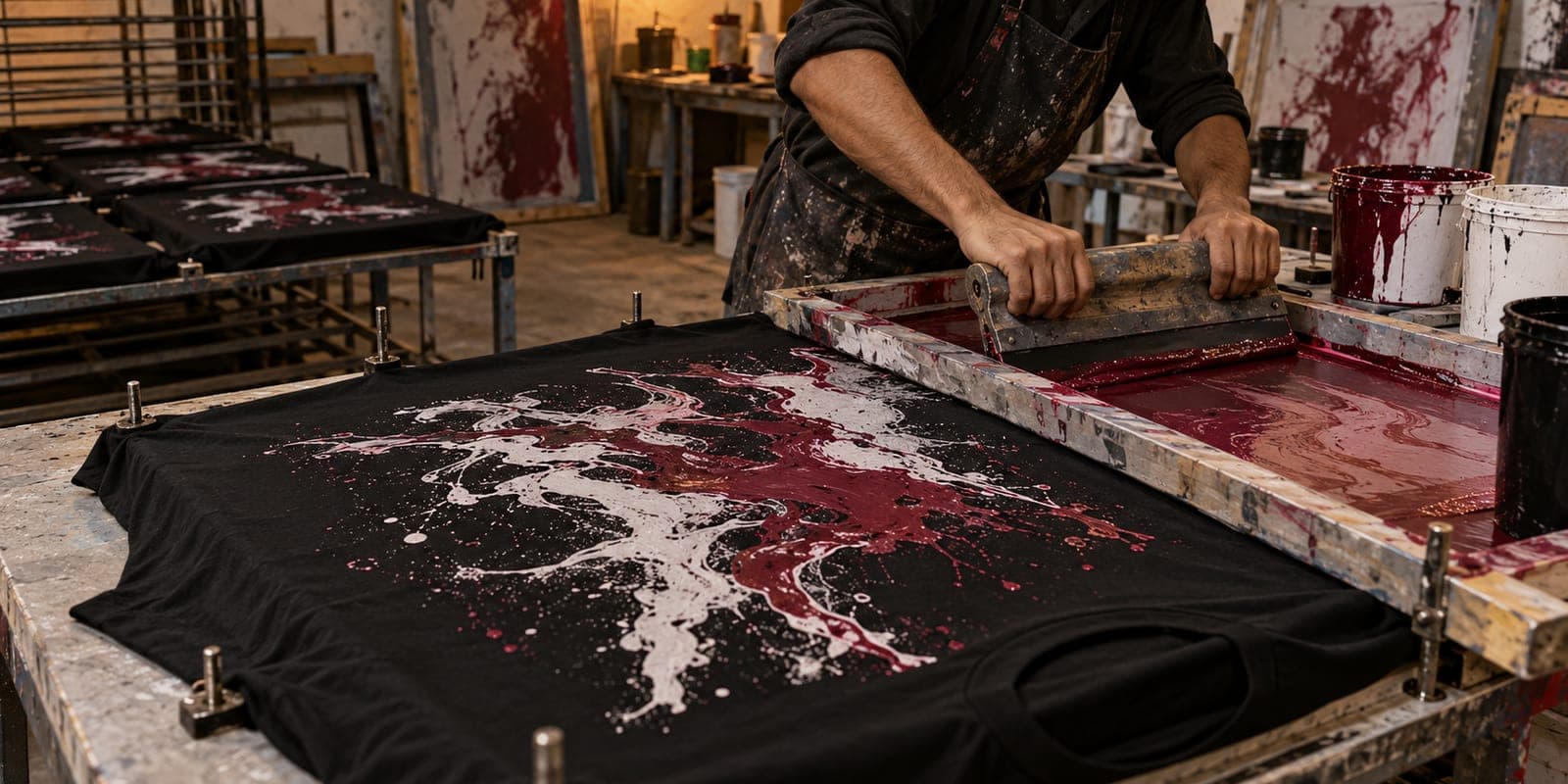
Printed and graphic t-shirts for men in Pakistan cost from about Rs. 700 for a heat-transfer print on a light blank to Rs. 2,000 to Rs. 3,500 for an oversized cotton tee with screen-printed or DTF artwork from an independent label. The print method decides how the tee ages: screen print and embroidery last longest, DTF and DTG handle detailed artwork well, and cheap vinyl transfers crack first. In 2026 the designs people want are large back prints, Urdu script, football and anime references on oversized bodies.
Every mall in Pakistan has a wall of printed t-shirts, and every Instagram feed has a drop of graphic tees. What separates them is not the picture but how it was put on the fabric, and what it was put on. This guide covers the print methods, how to judge them from a product page, where graphic t-shirts in Pakistan are heading in 2026, and what to pay. For the brands themselves, see t-shirt brands in Pakistan and, for the oversized end, streetwear clothing brands in Pakistan.
The five print methods you will meet
Screen printing
Ink is pushed through a stencilled mesh screen, one screen per colour. It is the oldest method and still the most durable for solid graphics: the ink bonds into the cotton, so a well-cured screen print outlasts the tee. Set-up costs mean it suits designs with a few colours in reasonable quantities, which is why most independent labels use it for their core pieces.
DTF (direct to film)
The design is printed onto a film with adhesive powder and heat-pressed onto the tee. DTF handles photographic detail and unlimited colours, works on dark fabric, and has become the default for detailed artwork in Pakistan since around 2023. Good DTF is soft and flexible; bad DTF feels like a plastic sticker and peels at the edges after a few washes.
DTG (direct to garment)
An inkjet printer sprays water-based ink straight into the fabric. Very soft hand-feel and excellent for gradients on light cotton, less punchy on black, and it fades sooner than screen print. Common for one-off and print-on-demand tees.
Heat-transfer vinyl
Cut vinyl pressed onto the tee. Cheapest, fastest, and the first to crack. Most Rs. 600 to Rs. 900 "graphic tees" in markets use it. Fine for a one-season novelty, not for something you want to wear for two years.
Embroidery and puff print
Embroidery is stitched thread, used for small chest marks and logos; it is the most durable finish and the most expensive per piece. Puff print is a screen-print ink that rises when cured, giving a raised 3D texture that has been popular on streetwear tees for the last two years.
How to judge a print from a product page
- The method is named. Labels using screen print, DTF or embroidery say so because it is a selling point; silence usually means vinyl.
- Close-up photos of the print surface. Screen print shows slight texture where the ink sits; a glossy flat sheet is a transfer.
- The body is heavy enough for the print. A large back print on 140 GSM cotton will curl and pull; 180 GSM and above holds it flat.
- Care instructions exist: wash inside out, cold, no tumble dry. A brand that bothers to say this has tested its prints.
- The price matches the method. Detailed full-colour artwork at Rs. 800 cannot be anything other than a cheap transfer; see the 7-point quality check.
What people are wearing in 2026
If you are searching for new t-shirt designs for 2026 in Pakistan, these are the directions that have moved from Instagram drops to the street.
- Big back prints with a small chest mark: the front stays quiet, the artwork lives on the back. RAAH's Mountain Silence Tee and Roadmap Tee are built this way.
- Urdu and Arabic script: calligraphy and single Urdu words such as راہ on the chest. The Maroon Signature Tee carries the Urdu RAAH logo; the full category is covered in Islamic and calligraphy t-shirts.
- Football graphics that are not jerseys: a name, a number or a country printed on a cotton streetwear body rather than a polyester replica. See the football tees and the Messi t-shirt guide.
- Anime and character art, drawn rather than screenshotted, like the Toji Oversized Tee.
- Road, travel and mountain artwork: muted palettes, line drawings, the idea of a journey. The Midnight Route Tee is the RAAH version.
- Motorsport: the Scuderia Ferrari Oversized Tee is RAAH's most expensive piece at Rs. 3,000; the wider market is in Ferrari t-shirt price in Pakistan.
What a graphic tee costs
Prices below are indicative bands from public retail listings and move with sales, seasons and fabric costs. Check the brand's own product page before you buy.
| Band | Typical price | Print and body |
|---|---|---|
| Market / marketplace | Rs. 600 – Rs. 1,000 | Vinyl or basic transfer on 140–150 GSM blank, regular fit |
| High street (Outfitters, Breakout) | Rs. 1,200 – Rs. 2,500 | Screen or DTF on mid-weight cotton, slimmer fits, seasonal graphics |
| Independent streetwear | Rs. 2,000 – Rs. 3,500 | Screen print or quality DTF on 180–220 GSM cotton, oversized cut, original artwork |
| Luxury streetwear | Rs. 10,000 and above | Block print, embroidery, hand-finished pieces (Rastah) |
RAAH sits in the independent band at Rs. 2,099 to Rs. 3,000. For how the high-street tees are priced, see Breakout t-shirt price and Outfitters t-shirts price; for the top end, why Rastah is so expensive.
Keeping a print alive
Wash inside out in cold water, skip the dryer, and never iron directly on the print. A screen print treated this way lasts for years; a DTF print lasts several seasons; vinyl will crack regardless. If you plan to wear a graphic tee often, the extra Rs. 1,000 for a proper print and a heavier body is cheaper per wear than replacing a market tee twice. For outfit ideas, see how to style an oversized t-shirt, and browse the current RAAH graphics in the shop.
Frequently asked questions
What is the price of printed t-shirts for men in Pakistan?
Market and marketplace printed tees cost about Rs. 600 to Rs. 1,000, high-street brands Rs. 1,200 to Rs. 2,500, and independent streetwear labels with original artwork on heavier cotton Rs. 2,000 to Rs. 3,500. RAAH graphic tees are Rs. 2,099 to Rs. 3,000.
Which print lasts longest on a t-shirt?
Embroidery and properly cured screen printing last longest. Good DTF is close behind and handles detailed artwork. Heat-transfer vinyl cracks and peels first.
What t-shirt designs are trending in Pakistan in 2026?
Large back prints with a small chest mark, Urdu and Arabic calligraphy, football player and country graphics on cotton streetwear bodies, drawn anime art and road or mountain line artwork, almost always on oversized drop-shoulder tees.
How do I wash a graphic t-shirt so the print does not crack?
Turn it inside out, wash cold on a gentle cycle, hang to dry and never iron on the print. Avoid tumble drying, which is the main cause of cracking.